

Tràng An and Hoa Lư
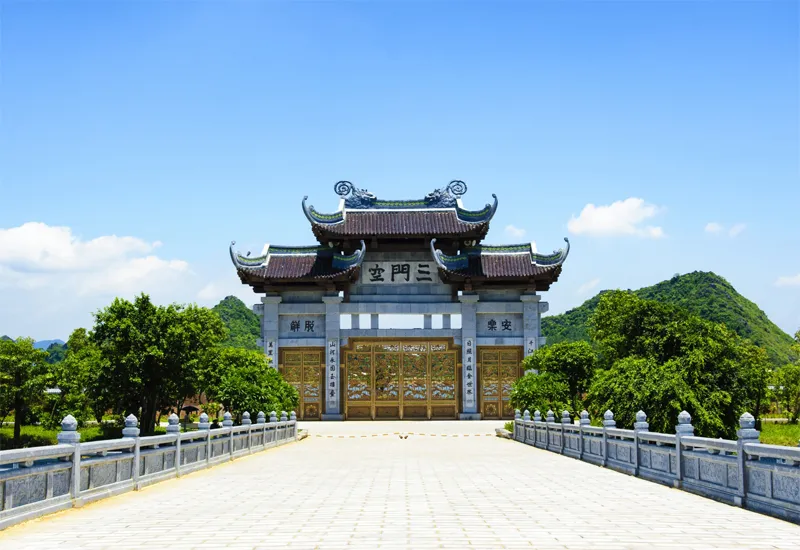
Take a Tràng An boat trip, then rest before visiting Hoa Lư Ancient Capital.
Familiar names before the reorganisation: Ninh Bình, Nam Định, Hà Nam.
The enlarged Ninh Bình includes the former Hà Nam and Nam Định provinces; this route focuses on limestone scenery and heritage around Hoa Lư.
From the Hoa Lu area and associated with the Hoa Lu capital.
Hoa Lu provides a starting point for a tenth-century state-building story.
After unifying the country, Dinh Bo Linh became emperor in 968, named the state Dai Co Viet and established its capital at Hoa Lu.
The emperor’s temple and the former capital give the story a tangible setting. Childhood tales such as reed-flag games should be identified as legend.
Explore Hoa Lu ancient capital and Dinh Tien Hoang Temple.
Contextual remembrance suggestions appear under attractions with a verified connection. A white flower where permitted is enough; sharing a photograph is optional.
The martyrs’ cemetery list and coordinates for Ninh Bình are being checked. No location is ready for publication here yet; this does not mean there are no martyrs’ cemeteries in this province.
Suggested two days around Hoa Lư–Tràng An, plus Tam Cốc
Use a taxi or driver between sites; choose a boat route at the pier to suit your fitness, weather and available time.
Keep the same local base, with an optional third day for culture, food and time to unwind.
Take a Tràng An boat trip, then rest before visiting Hoa Lư Ancient Capital.
Allow the main part of the day for Bái Đính, with breaks within its extensive grounds.
Enjoy Tam Cốc’s landscape and visit Bích Động Pagoda if comfortable with further walking.
An editorial route suggestion, excluding travel to and from the destination. The destination catalogue offers choices for different trips; not all places are close together. Check routes, weather and opening arrangements before booking.
An extensive Buddhist complex that rewards an unhurried visit.
Boat routes wind through limestone cliffs, waterways and caves.
Historic sites introduce the Đinh and Early Lê periods.
River, limestone hills and fields create a changing seasonal landscape.
Hillside pagoda buildings offer a quiet cultural stop.
Wetlands and limestone hills appeal to nature watchers.
Local restaurants prepare goat meat in several styles.
Crisp rice pieces served with sauce or savoury accompaniments.
Glass noodles with eel in a savoury broth.
Local climbing perch prepared in traditional home-style dishes.
Leaf-wrapped pork and pork skin fermented with toasted rice powder.
These suggestions introduce local culture; they are not rankings or guarantees of quality. Ask providers about ingredients, allergies and dietary needs; check local rules, weather, opening hours and prices before travelling.
No community stories have been approved for this page yet. Share a place name, area and visit date for editorial review. We do not invent reviews on behalf of visitors.
Edited and checked: 19 October 2026. Some sources use former boundaries; suggestions are grouped under the current province-level units in Resolution 202/2025/QH15. Read the resolution ↗
Put Vietnam’s national interests, sovereignty and reputation above private gain in editorial decisions and sharing.
Respect Vietnamese law and local rules. Do not publish misinformation, violate privacy or promote unlawful conduct.
Preserve heritage, respect beliefs and the cultural diversity of communities, and travel responsibly towards people and nature.
Honour the martyrs who gave their lives for the nation’s independence and peace. Be respectful at historical and memorial sites; never exploit suffering for engagement.
Share an honest picture of Vietnam’s landscapes and people in Vietnamese and English. Welcome visitors with hospitality, respect and a willingness to learn together.